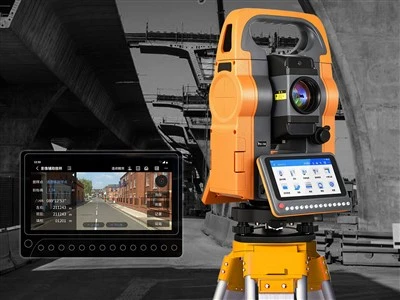

A total station is a precision measuring instrument. Correct operation is crucial not only for measurement accuracy but also for the instrument's safety and lifespan. The operating procedures for a total station can be summarized as follows:
Before use, the total station should be securely mounted on a tripod. Adjust the tripod height and ensure the legs are firmly planted. Then, use the leveling screws and electronic or optical level bulb to precisely level the instrument, ensuring it is horizontal. This is fundamental for accurate angle and coordinate measurements.
During measurement, first align the total station with the target prism or measuring point. Adjust the telescope's clarity and crosshair alignment to ensure accurate distance and angle readings. Before measurement, select an appropriate distance measurement mode (reflective or prism-free distance measurement) and ensure an unobstructed line of sight to avoid light interference and environmental factors affecting the measurement results.
After measurement, data should be saved or exported promptly to prevent data loss. Avoid violent impacts, tilting, or overloading during operation. After fieldwork, clean the lens and instrument surface and store it properly in its protective case. Regular calibration and maintenance ensure the total station maintains high accuracy and stable performance over the long term.