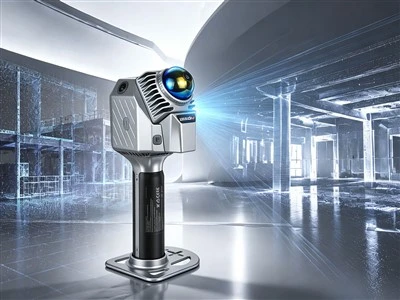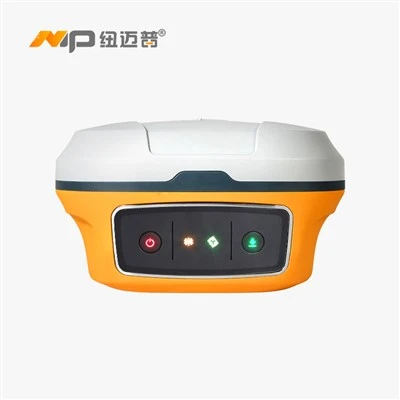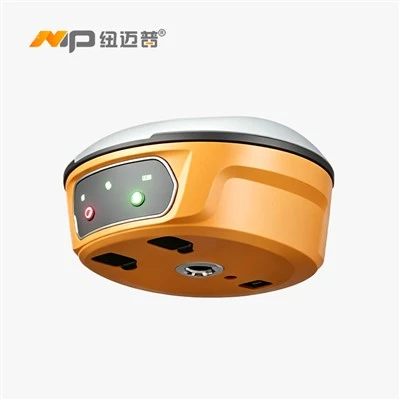

3D laser scanning technology is a relatively new technology that has attracted increasing attention in the research field in China in recent years. It utilizes the principle of laser ranging to quickly reconstruct a 3D model of the target object and various graphic data such as lines, surfaces, and volumes by recording a large number of dense points on the surface of the object being measured, including their 3D coordinates, reflectivity, and texture. Because 3D laser scanning systems can acquire a large number of data points of the target object densely, it is considered a revolutionary technological breakthrough, representing an evolution from single-point measurement to surface measurement, compared to traditional single-point measurement. This technology has seen numerous trials, applications, and explorations in fields such as cultural relic protection, architecture, planning, civil engineering, factory renovation, interior design, building monitoring, traffic accident handling, legal evidence collection, disaster assessment, ship design, digital cities, and military analysis. A 3D laser scanning system consists of hardware for data acquisition and software for data processing. Its core ranging method is mainly based on the Time of Flight (ToF) method or phase-shift method, calculating distance by measuring the propagation time or phase difference of the laser signal. The system achieves three-dimensional spatial coverage through mechanical rotation, multi-beam integration or micro-mirror and other technologies, thereby generating dense point cloud data. In the field of cultural relic protection, the non-destructive acquisition of fragile cultural relics can be achieved through multispectral data fusion and other technologies, reducing the risk of intervention to cultural relics by traditional measurement methods.
It works by applying scanning technology to measure the size and shape of workpieces. It is mainly used in reverse engineering, responsible for surface copying, workpiece three-dimensional measurement, and can quickly measure the contour set data of existing three-dimensional objects (samples or models) without technical documents, and then construct, edit and modify them to generate a surface digital model in a general output format. The three-dimensional laser scanning system can be divided into airborne, vehicle-mounted, ground and handheld types according to the carrier. For special application scenarios, auxiliary modules such as multispectral synchronous verification can be equipped. High-precision three-dimensional reconstruction is achieved through non-contact measurement technology.