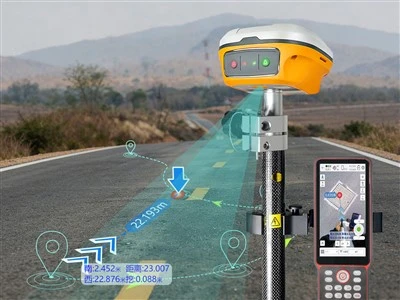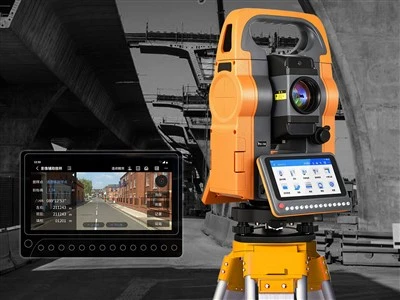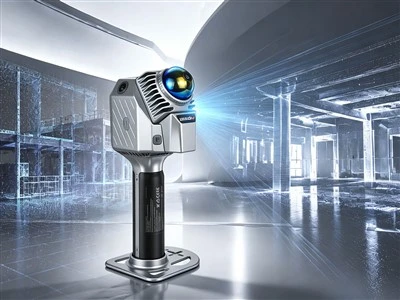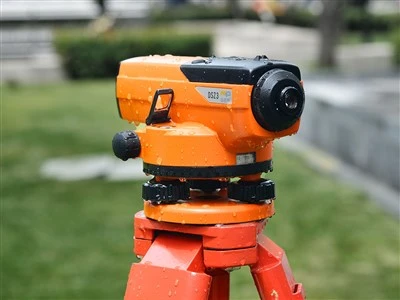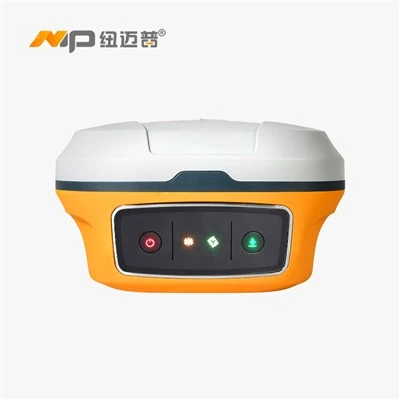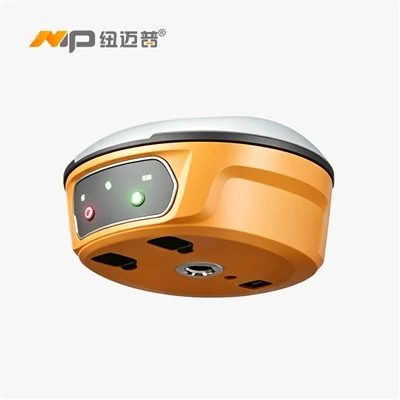

A 3D laser scanner, also known as a laser scanner, is a surveying instrument that acquires three-dimensional coordinate data of an object's surface based on the principle of laser ranging. The hardware consists of a laser emitter, receiver, time counter, rotatable filter, control circuit board, microcomputer, and CCD sensor, integrating a computer, power supply, support frame, and professional software system. It breaks through the traditional single-point measurement mode, achieving millimeter-level precision in 3D data acquisition. Core technologies support structured light, Time-of-Flight (ToF), and photogrammetry, with a maximum scanning rate of 500,000 points per second and a static measurement accuracy of ±1.5mm. The FreeScan Trak Pro2 model, launched in 2024, achieves a scanning speed of 3.68 million scans per second, while the FreeScan Combo+ achieves 0.02mm metrological-level accuracy.
This equipment, through a combination of stand-alone and SLAM technologies, generates 3D point cloud models in STL/OBJ format, applicable to building engineering inspection, cultural relic protection, industrial manufacturing, 3D modeling of mining areas, and deformation monitoring of rail transit tunnels. The visualization platform formed by its integration with BIM technology can dynamically monitor construction quality and complete the digital archiving of cultural heritage.