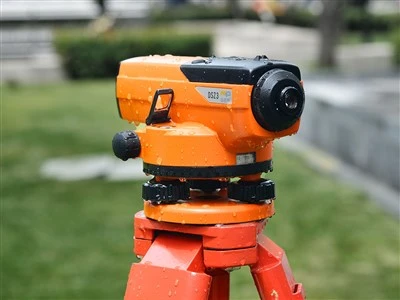

Optical theodolite. These instruments read angles through an optical scale and vernier system, relying on manual observation and readings to complete measurements. Their structure is relatively traditional and requires high operational skill, but they offer strong stability and reliable accuracy, and are commonly used in basic surveying and engineering layout.
Electronic theodolite. It incorporates a photoelectric encoder into its structure, converting angle changes into electrical signals and directly outputting the measurement results through a digital display. Compared to optical theodolites, electronic theodolites offer faster readings, smaller errors, and reduced human error, making them the most widely used type in engineering surveying.
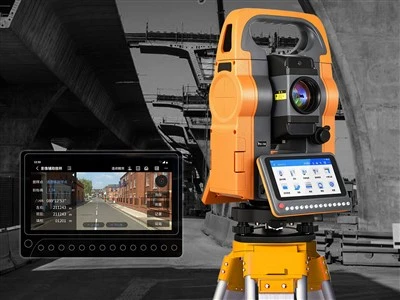
Total station theodolite (the predecessor or integrated form of the total station). It integrates distance measurement functionality into the electronic theodolite, enabling simultaneous angle and distance measurements, coordinate calculations, and data storage. With more comprehensive functions, it has gradually become the mainstream equipment in modern surveying.
Theodolites can also be classified by accuracy level into ordinary theodolites and precision theodolites. The former is used for general engineering surveying, while the latter is used for high-precision control surveying and scientific research.